

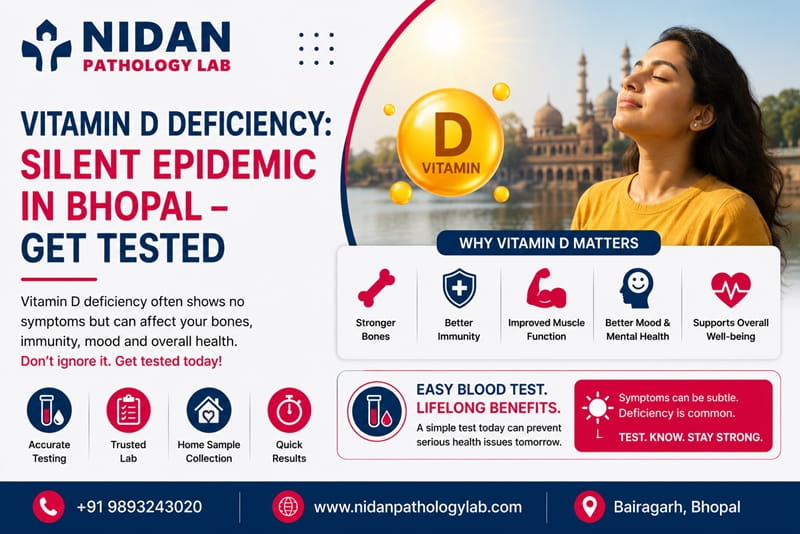
Vitamin D Deficiency: The Silent Epidemic in Bhopal — Get Tested
Despite being a country that gets plenty of sunshine, India has one of the highest rates of Vitamin D deficiency in the world. Studies suggest that up to 70–90% of urban Indians are deficient in Vitamin D. In cities like Bhopal, where people spend most of their time indoors — in offices, homes, and vehicles — this problem is even more common.
What makes Vitamin D deficiency particularly tricky is that it develops slowly and the symptoms are often vague and easy to dismiss. Many people in Bhopal are living with this deficiency and attributing its symptoms to stress, aging, or general weakness — not knowing that a simple blood test could reveal the real cause.
What Is Vitamin D and Why Does It Matter?
Vitamin D is not just a vitamin — it behaves more like a hormone in the body. It plays a critical role in:
- Calcium absorption — essential for strong bones and teeth
- Immune system function — protecting you from infections
- Muscle strength and function
- Mood regulation — low Vitamin D is linked to depression
- Heart health — low levels are associated with higher cardiovascular risk
- Insulin regulation — affects blood sugar management
Every cell in your body has Vitamin D receptors, which tells you how important this vitamin is for overall health.
How Does the Body Get Vitamin D?
The body produces Vitamin D when skin is exposed to UVB rays from sunlight. It can also be obtained from certain foods and supplements.
Sun Exposure
The primary and most natural source. However, factors like living in urban areas, working indoors, wearing full-coverage clothing, using high-SPF sunscreen, and having darker skin tones — all reduce the body’s ability to produce Vitamin D from sunlight.
Food Sources
Very few foods naturally contain Vitamin D. Fatty fish (salmon, mackerel), egg yolks, mushrooms exposed to sunlight, and fortified foods (milk, cereals) contain some Vitamin D — but usually not enough to meet the body’s needs on their own.
Symptoms of Vitamin D Deficiency
Symptoms are often subtle and progress slowly. Common signs include:
- Persistent fatigue and low energy even after adequate sleep
- Bone pain — especially in the back, legs, and hips
- Muscle weakness or cramps
- Frequent infections — getting sick more often than others
- Mood changes, depression, or anxiety
- Hair loss — more than usual
- Slow healing of wounds
- Joint pain
- Difficulty concentrating or brain fog
In children, severe Vitamin D deficiency causes rickets — a condition that leads to soft, weak bones and skeletal deformities. In adults, it causes osteomalacia, which is painful softening of bones.
Who Is at Risk in Bhopal?
- Office workers who spend most of the day indoors
- Women who wear full-body clothing that limits sun exposure
- Elderly people who go outdoors less frequently
- Vegetarians and vegans who avoid animal-based foods
- People with darker skin tones — darker skin needs more sun exposure to produce the same Vitamin D
- Overweight individuals — Vitamin D gets stored in fat tissue and is less available in the bloodstream
- Pregnant women — higher Vitamin D requirements during pregnancy
What Is the Normal Vitamin D Level?
Vitamin D is measured through a blood test called 25-Hydroxyvitamin D (25-OH Vitamin D). Here are the general ranges:
- Deficient: Below 20 ng/mL (below 50 nmol/L)
- Insufficient: 20–29 ng/mL
- Sufficient / Normal: 30–100 ng/mL
- Toxic / Too High: Above 100 ng/mL (rare, usually from excessive supplementation)
Most experts recommend maintaining Vitamin D levels between 40–60 ng/mL for optimal health benefits.
Risks of Untreated Vitamin D Deficiency
If left untreated over years, Vitamin D deficiency can lead to:
- Osteoporosis and increased fracture risk
- Type 2 diabetes — low Vitamin D worsens insulin resistance
- Cardiovascular disease — heart attack and stroke risk increases
- Autoimmune conditions like multiple sclerosis and rheumatoid arthritis
- Depression and anxiety disorders
- Certain cancers — preliminary research links low Vitamin D to higher cancer risk
How Is Vitamin D Deficiency Treated?
Treatment depends on how low your levels are:
- Mild deficiency: Increased safe sun exposure and dietary changes
- Moderate deficiency: Vitamin D3 oral supplements (60,000 IU per week or as prescribed)
- Severe deficiency: High-dose Vitamin D therapy under medical supervision
Never self-medicate with high-dose Vitamin D supplements without testing and a doctor’s guidance. Unlike most water-soluble vitamins, Vitamin D is fat-soluble and can accumulate to toxic levels.
Vitamin D Test at Nidan Pathology Lab Bhopal
Nidan Pathology Lab in Bairagarh, Bhopal offers the 25-OH Vitamin D test at affordable prices. The test is a simple blood draw and no special preparation is required. Results are usually available within 24–48 hours and shared digitally on WhatsApp.
If you have been feeling fatigued, have bone pain, or simply want to check your Vitamin D levels as part of a wellness checkup, this test is a must. You can also book home sample collection if you prefer not to visit the lab.
Conclusion
Vitamin D deficiency is one of the most common and most overlooked health problems in Bhopal. The good news is that it is very easy to diagnose with a simple blood test and straightforward to treat once identified.
Do not let fatigue, bone pain, or frequent illness hold you back. Book your Vitamin D test at Nidan Pathology Lab today. Call +91 9893243020 or visit nidanpathologylab.com.
Nidan Pathology Lab, Bairagarh, Bhopal | +91 9893243020 | nidanpathologylab.com